Thread Rolling
Wear resistance through cold forming
Rolling of trapezoidal lead screws
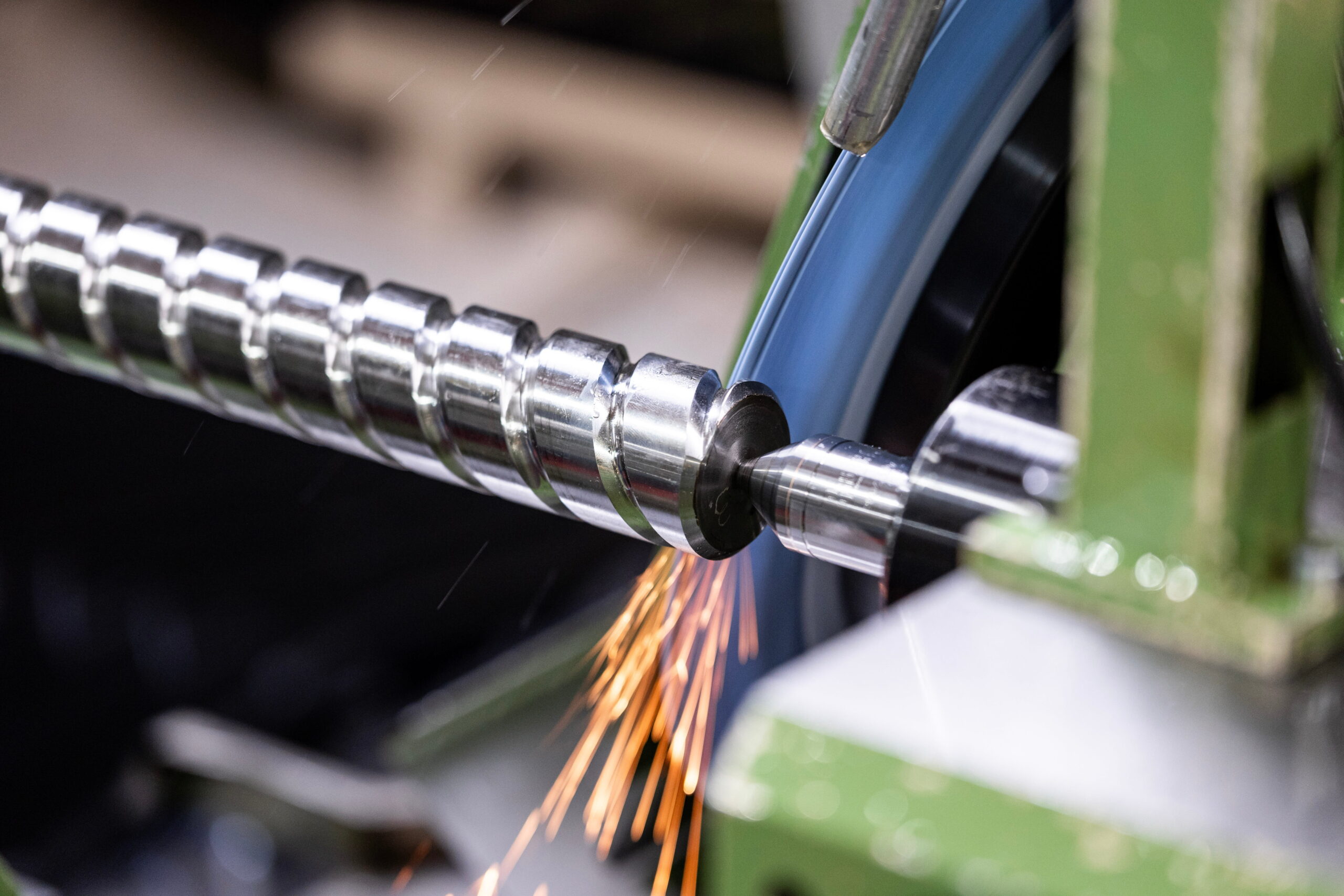
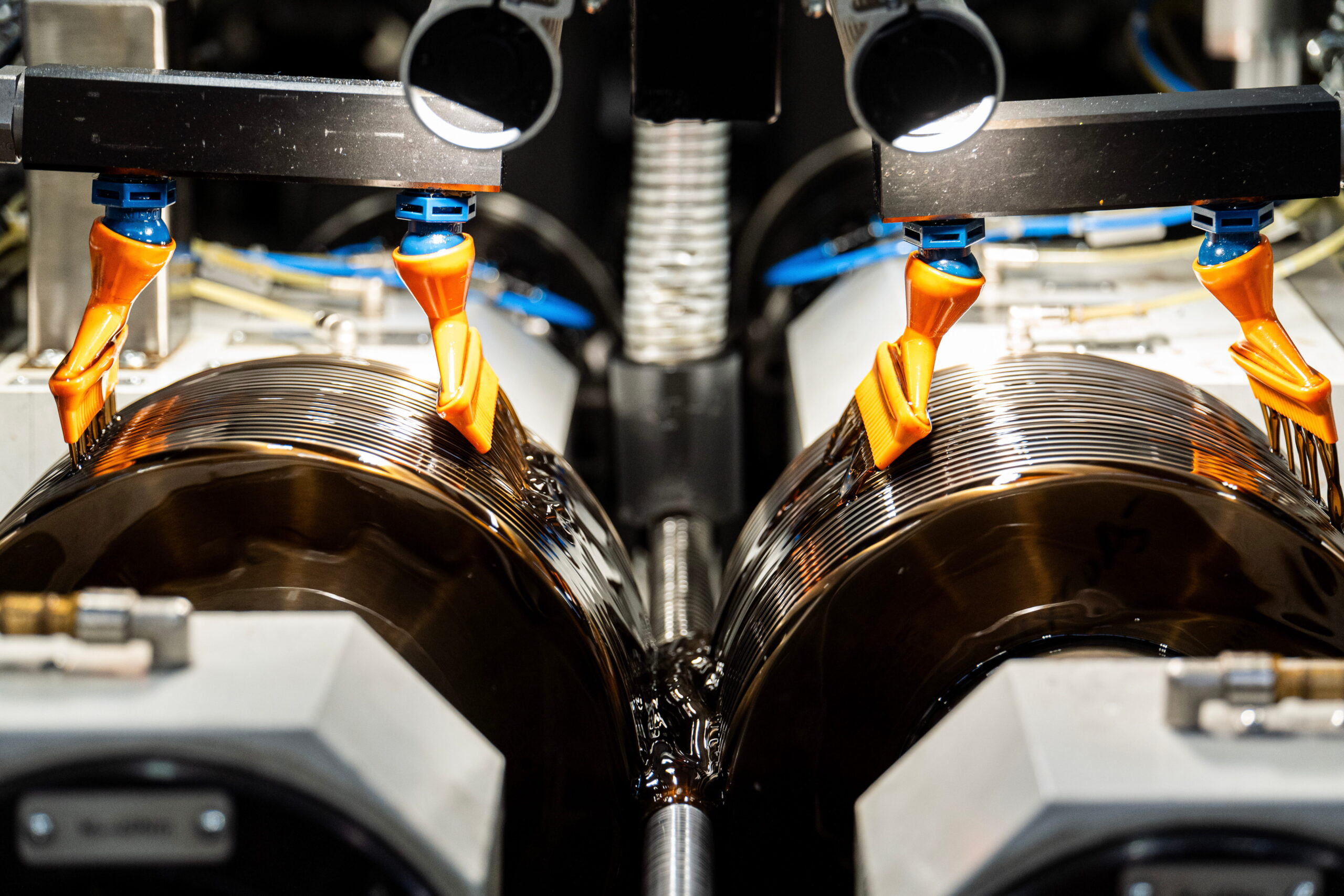
During rolling, the thread is formed into the material by cold forming instead of being cut by machining. This keeps the material fibers intact, resulting in higher strength, excellent surface quality, and low friction.
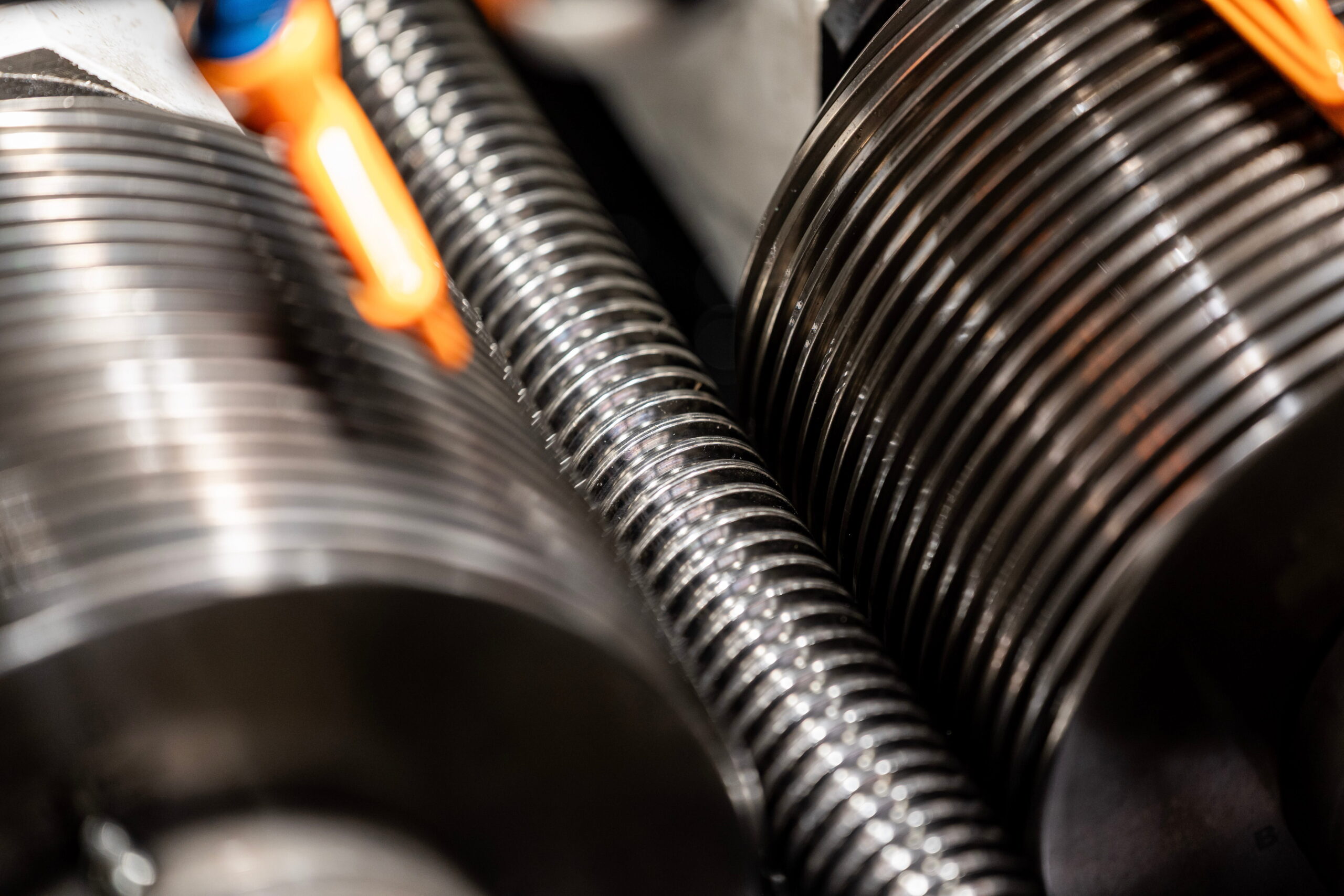
Rolls
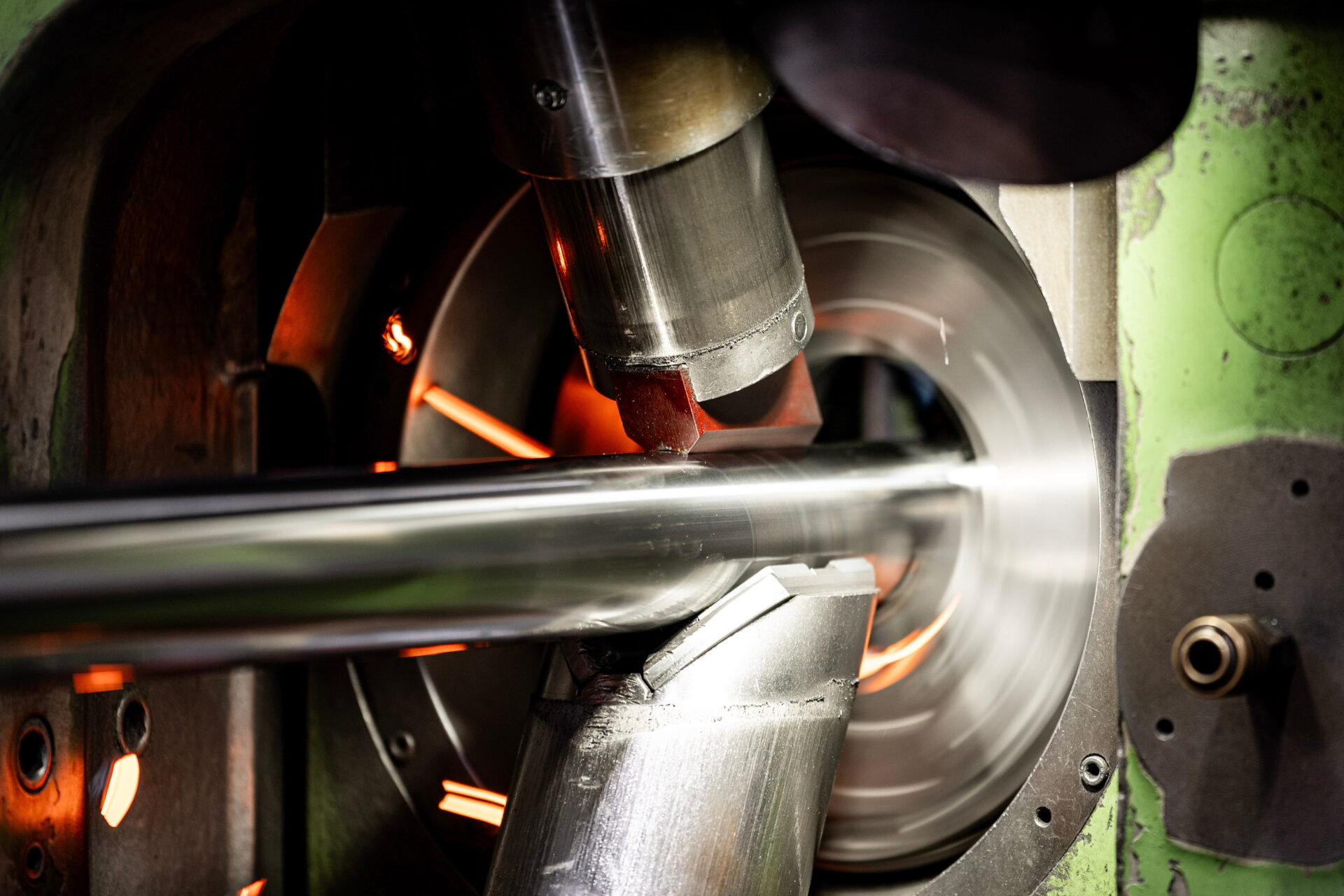
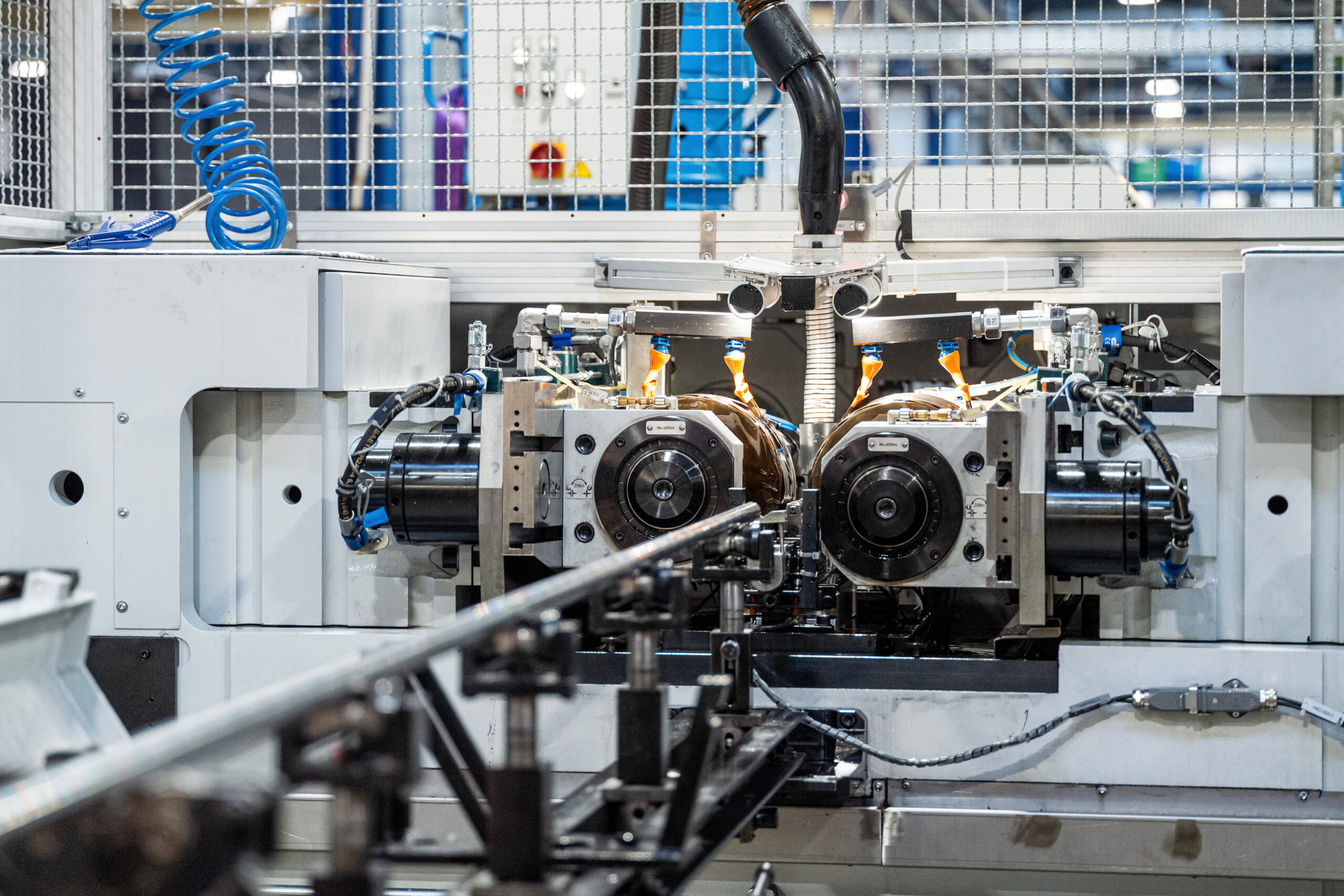
Thread rolling, also known as thread forming, is a highly efficient process for manufacturing trapezoidal lead screws. In thread rolling, the thread is created through plastic deformation of the workpiece. This is achieved by applying compressive stress using special tools that transfer the thread profile onto the workpiece.
Your Advantages at a Glance
- Increased wear resistance
Work hardening during the rolling process compacts the material in the thread area, leading to higher surface hardness and thus significantly improved wear resistance. - Higher tensile and fatigue strength
The fiber structure of the material remains uninterrupted during rolling, which significantly increases mechanical load capacity compared to cut threads. - Improved surface quality
The burnished thread flanks feature a very smooth surface, which reduces friction and increases service life. - High profile accuracy
The precise raw material and the controlled rolling process enable an exact thread form with high repeatability.
- Lower susceptibility to cracking
Since no material is separated, there are no notch effects or micro-cracks, which can occur during cutting. - Cost-effectiveness
Rolling is a fast and material-efficient process that is particularly cost-effective for large quantities. - Lower lubricant requirement
The smooth surface reduces lubricant consumption and improves running behavior. - Environmental friendliness
Since no chips are produced, the process is more resource-efficient than machining methods.
The process in detail – thread rolling
Areas of application
Rolled trapezoidal lead screws are suitable wherever wear resistance, load capacity, and long-lasting performance are required:
- Automation technology
- Mechanical engineering
- Medical Technology
- Positioning systems and linear drives
Comparison: Rolling vs. Cutting
Rolled spindle
- Cold-formed: The grain flow remains intact
- Higher strength and surface quality
- Lower friction and tendency to corrode
- Cost-efficient for large quantities
Cut spindle
- Machined: The grain flow is interrupted
- Lower strength & higher roughness
- Higher wear during continuous operation
- More flexible for special profiles
Extended product solutions, services, and accessories
- We supply complete assemblies with fixed and floating bearing blocks as well as nut housings. Our heavy-duty program “Herkules” offers ball screws for the highest load forces.
- Designers can request nut drawings in various CAD formats. Our engineering department will be happy to provide you with CAD data for your lead screw drive upon placement of an order.
- Additionally, we offer various wiper systems and complete covers for our ball screws to comprehensively meet your requirements.
Product variants and adjustments
We offer trapezoidal lead screws in various materials, lengths, and tolerance classes. Upon request, we can implement custom designs, e.g., with special ends, bores, or surface treatments.
Our production allows for flexible adaptation to individual technical requirements.
Technical data
- Lead accuracy: 0.1 mm per 300 mm
- Straightness: 0.8 mm per 1,000 mm
- No flaking: optimal surface quality
- Materials: Heat-treatable steel (C15) and stainless steel (Niro) available
- Standards: Standard 1 m, 1.5 m, 2 m, 3 m – special lengths on request
- Diameter: 4 – 60 mm
- Quality classes: GKI and KGII
- GKI: Lead deviation 0.1 mm/300 mm; straightness 0.8 mm/1,000 mm; flaking: inadmissible
- GKII: Lead deviation 0.3 mm/300 mm; straightness 1.5 mm/1,000 mm; flaking: permissible
Technologies