
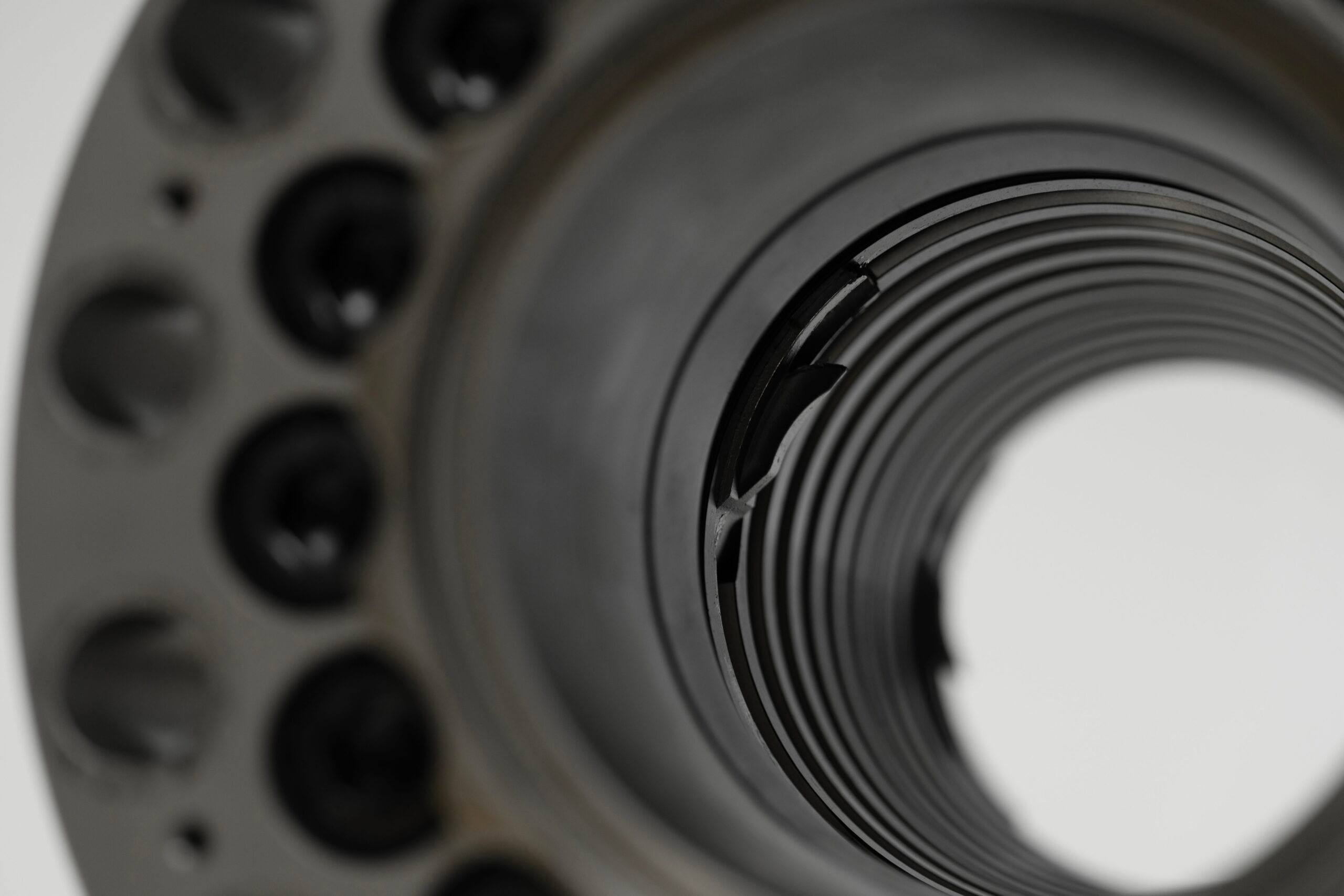
BALL THREAD TECHNOLOGY
Ball Screw Drive
Technology
Through well-thought-out construction, modern manufacturing techniques and matched components, a ball screw technology is created th

Materials
Die Leistungsfähigkeit eines KGTs hängt entscheidend von der passenden Werkstoffwahl ab. Je nach Anwendung können Spindeln und Muttern aus unterschiedlichen Materialien gefertigt werden. Von hochfesten, gehärteten Stählen über verschleißarme Bronze bis hin zu korrosionsbeständigem Edelstahl (Niro) stehen vielfältige Optionen zur Verfügung.
Unsere Kugeln bestehen je nach Wahl aus Keramik oder 100Cr6 der Güteklasse G5.
Career profile
Kammerer-Kugelgewindetriebe ball screw drives are fundamentally equipped with gothic raceway profiles and the maximum possible pressure angle ß. Additionally, the ball diameter is calculated for each respective application.
Advantages
- Optimal conformity ratios
- Highest load ratings and thus long service life
- Best running characteristics
- Efficiency at 98%
- Optimal rigidity
- Nearly constant drive torques
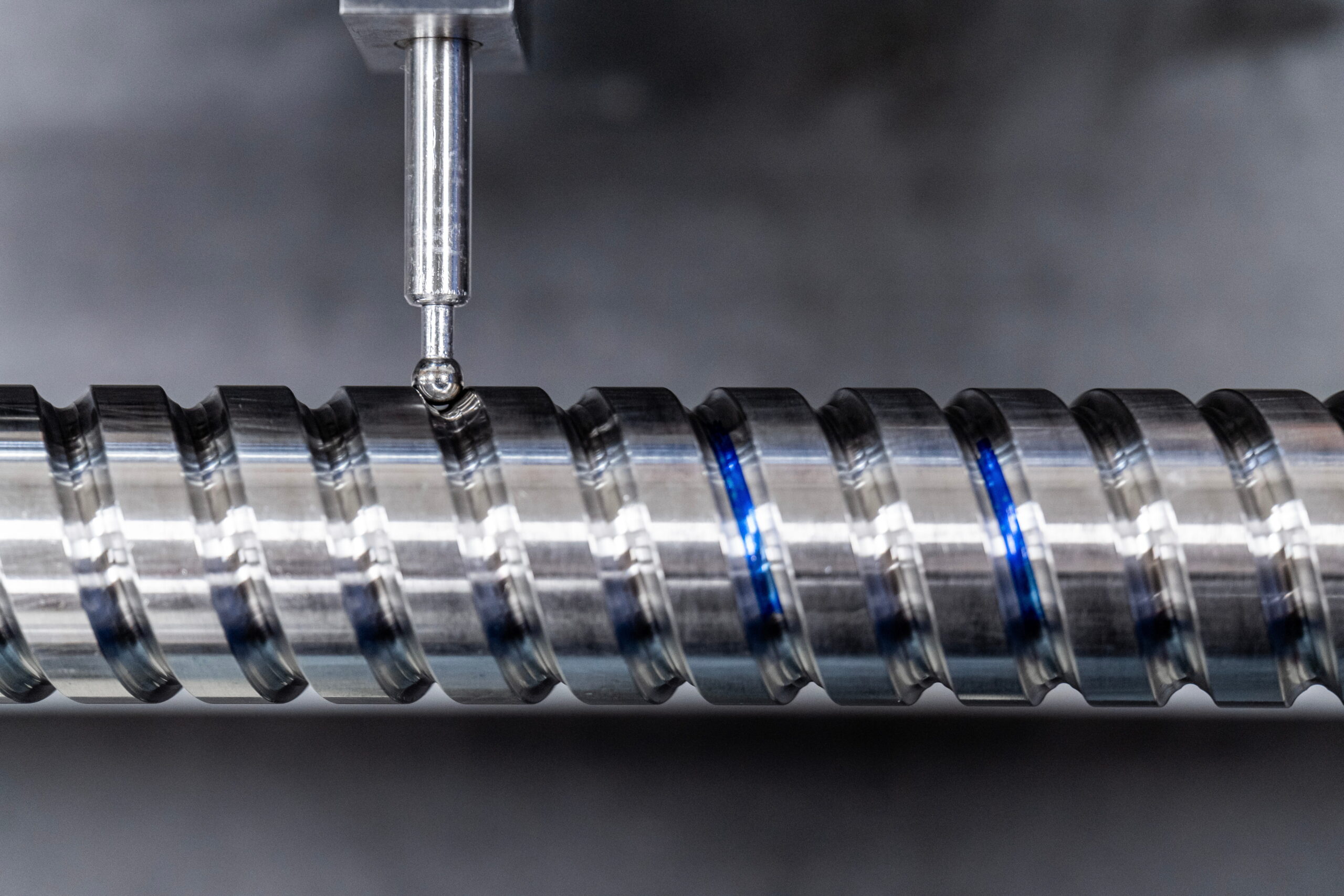

Effciency
The efficiency of a ball screw drive describes the ratio of output to input power and is a measure of the friction losses in the system.
It is primarily influenced by the lead angle and the friction angle. With increasing lead, the efficiency rises as the relative proportion of friction decreases. The friction angle in turn depends on the coefficient of friction between the balls, spindle, and nut.
Due to rolling friction, ball screw drives achieve very high efficiencies of typically 0.9 to 0.98. Due to the low friction, ball screw drives are already non-self-locking at small lead angles, making a reversal of the direction of movement necessary.
Preload (Axial Play)
The preload of a ball screw drive serves to deliberately reduce or completely eliminate the axial play between the spindle and nut. A preloaded ball screw drive increases axial rigidity, improves positioning and repeatability accuracy, and reduces backlash. The level of preload is adapted to the respective application, as it influences friction torque, efficiency, and service life.
Spindle
The spindle geometry has a direct influence on the achievable axial play. Lead tolerance, runout, and surface quality determine the uniformity of ball loading and the consistency of preload.
Nut
Through preloaded ball sets or double-nut concepts, the preload can be significantly influenced by the nut. The design and configuration define the preload force, the remaining axial play, and the friction behavior.
Deflectors
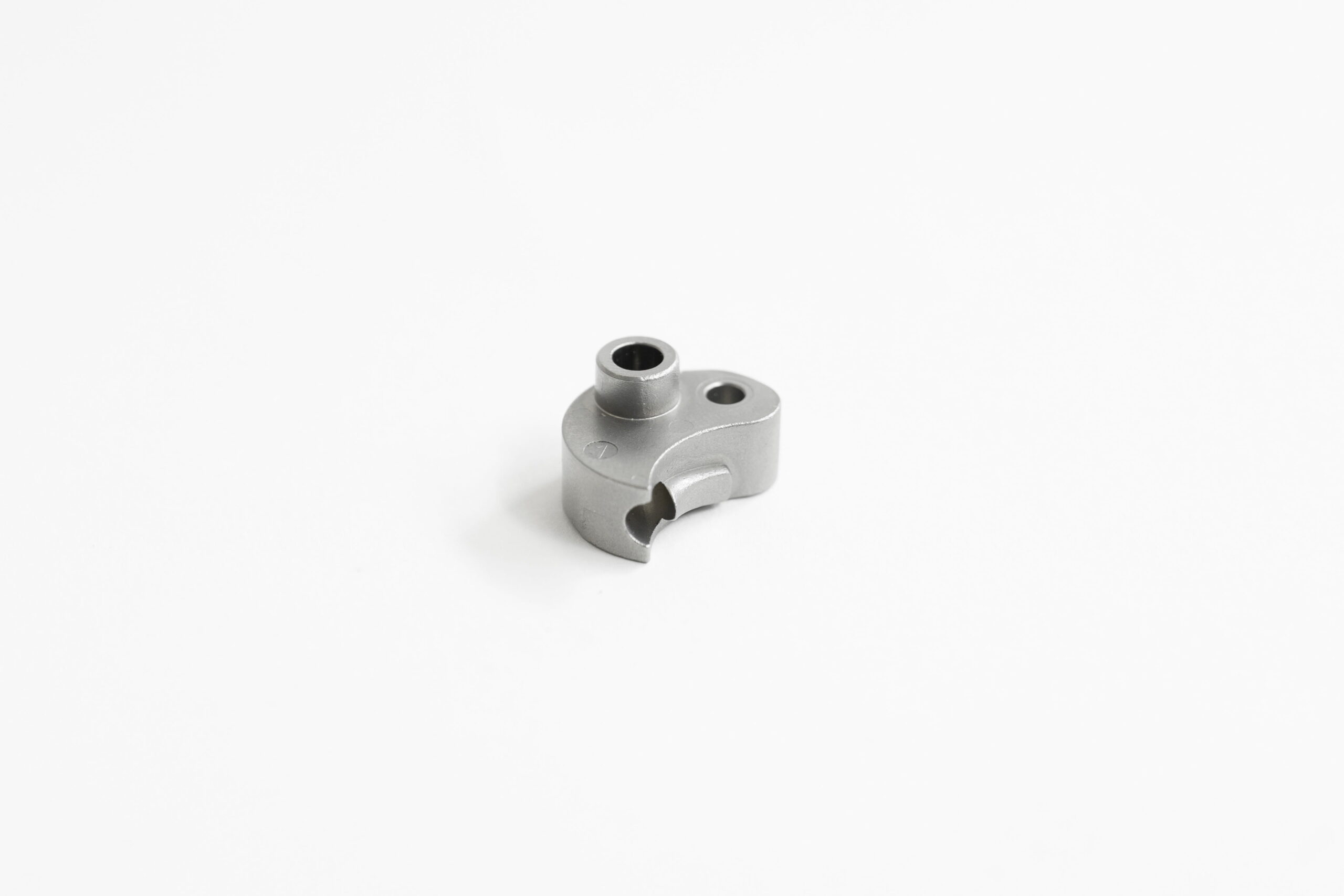
In our ball screw drives, we deliberately use individually adapted deflectors, so that we can precisely tune each one to the respective lead, regardless of the complexity of the requirements.
The result: Maximum smoothness of operation, optimized power transmission, and a significantly extended service life.
Lebensdauer
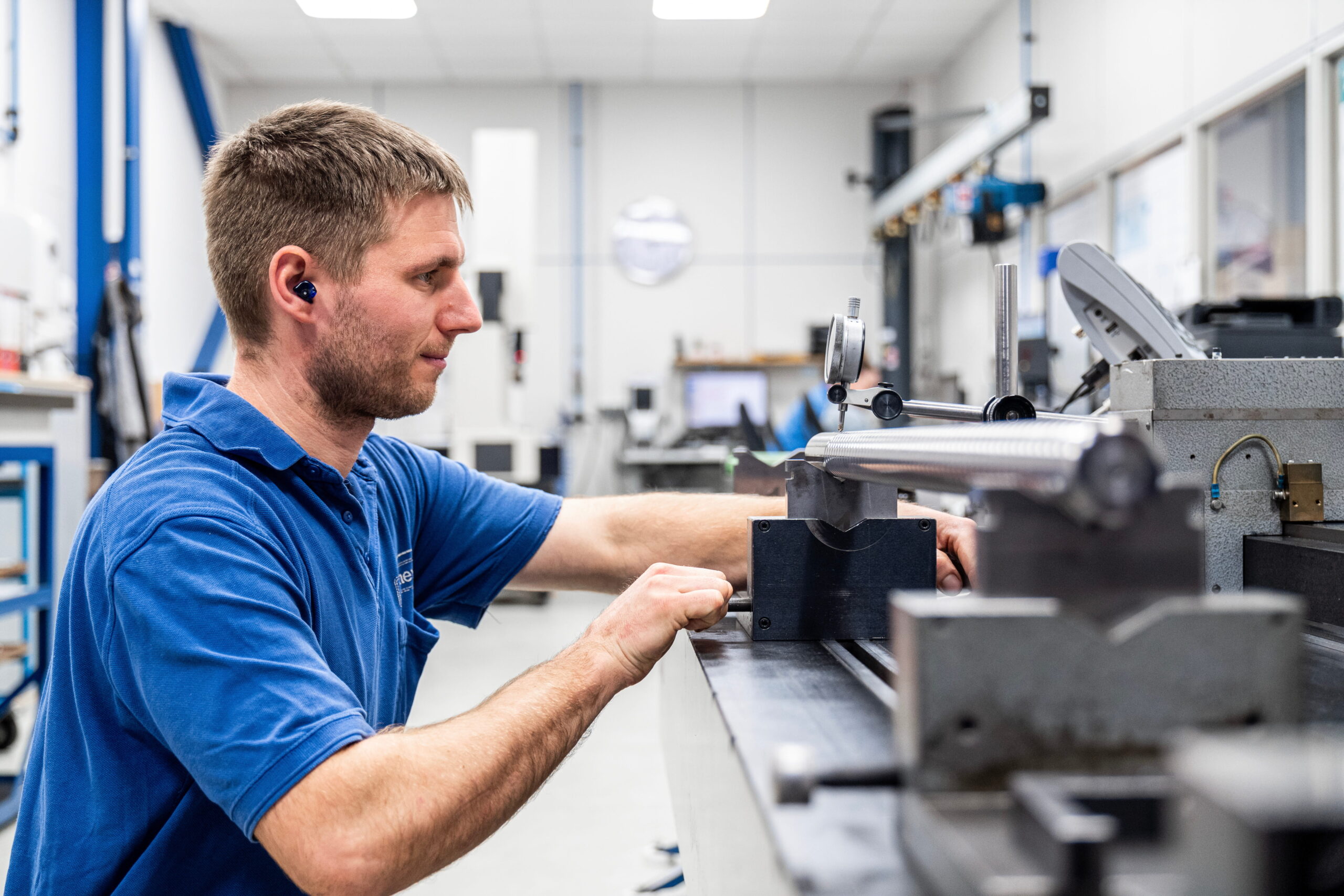
The service life of a ball screw drive is generally determined by the load rating of the ball raceway and the occurring loads. It describes the distance that the screw drive can travel under defined conditions before fatigue occurs at the rolling contacts.
The main factors for service life are: axial and radial loading, dynamic stress, lubrication, material quality, and manufacturing precision of the spindle and nut. Excessive loads or insufficient lubrication lead to increased wear and significantly reduce service life.
The service life can be estimated mathematically using the equivalent dynamic load rating and the achievable number of ball revolutions. Ball screw drives are characterized by high fatigue strength and, under optimal conditions, achieve travel distances of several thousand kilometers with precise guidance.
Nut types
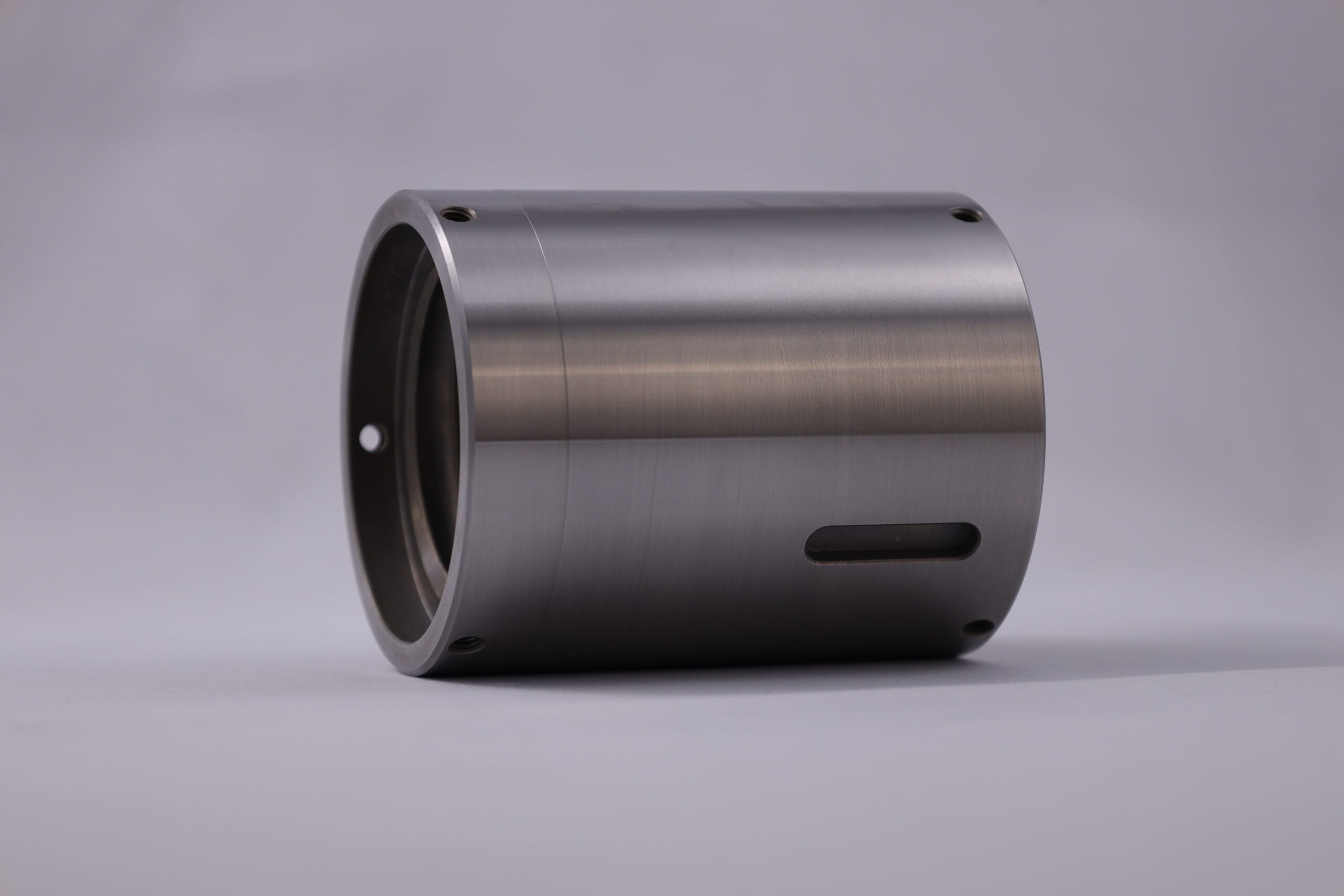
Simple nut
Learn more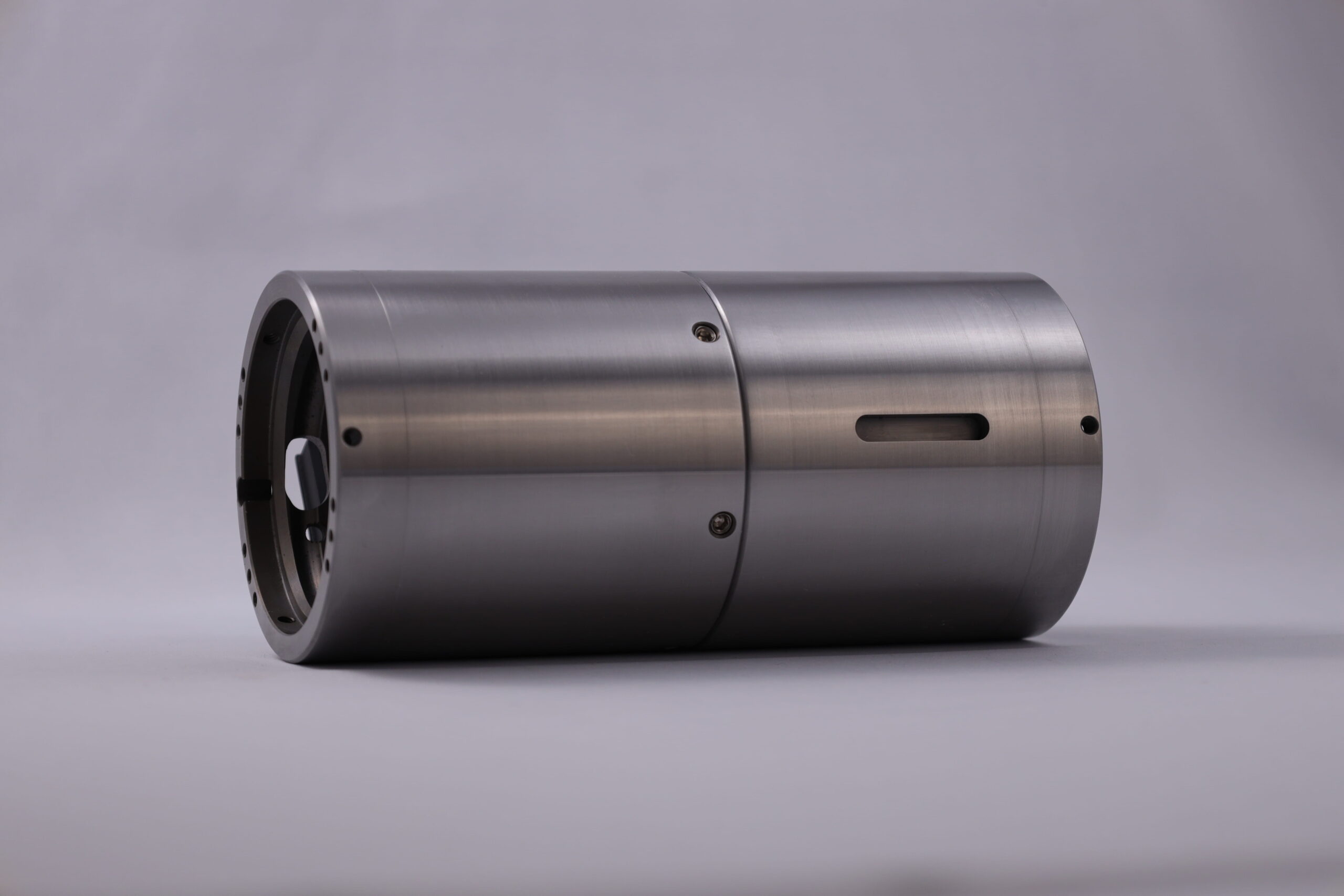
Double Nut
Learn more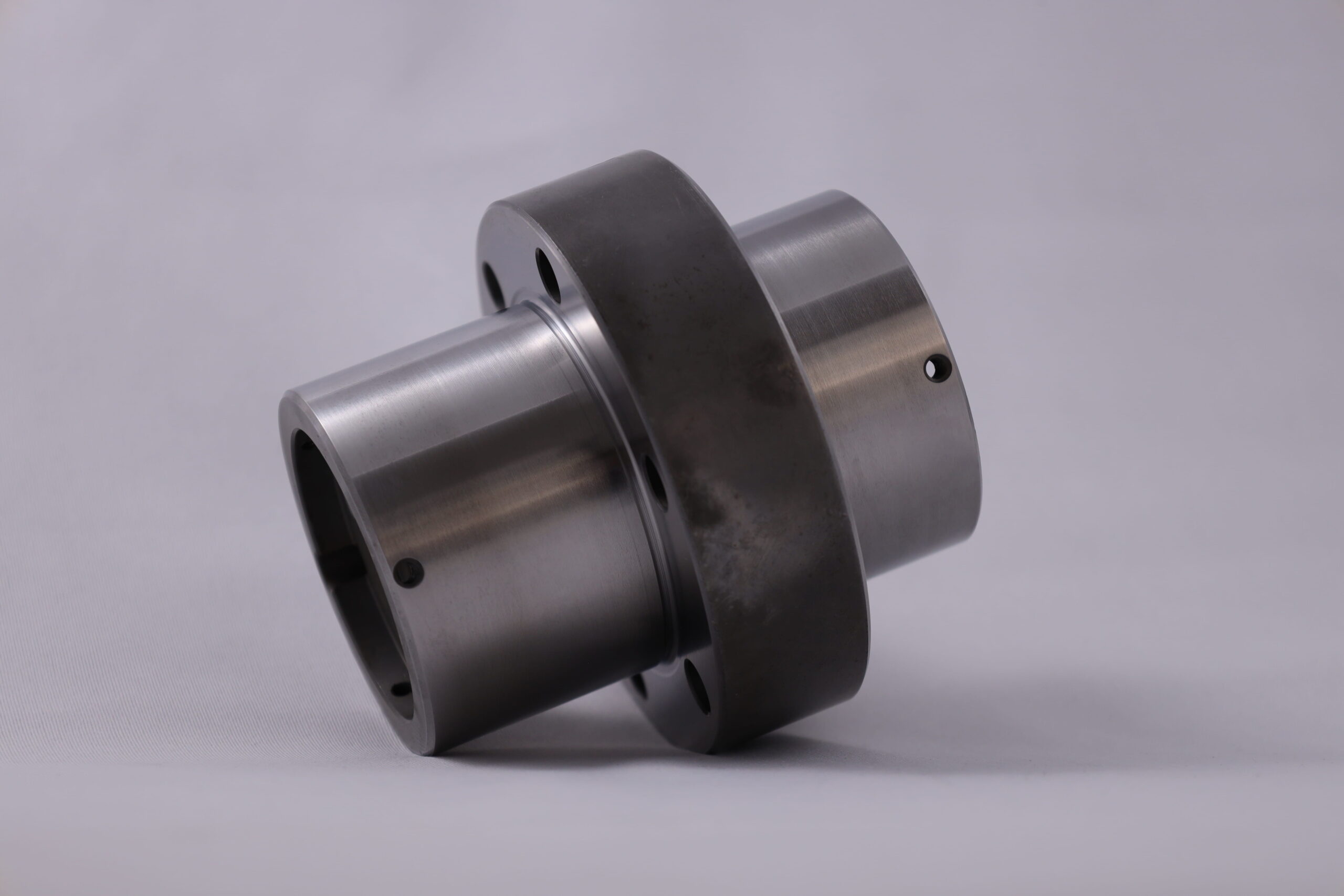
Center flange nut
Learn more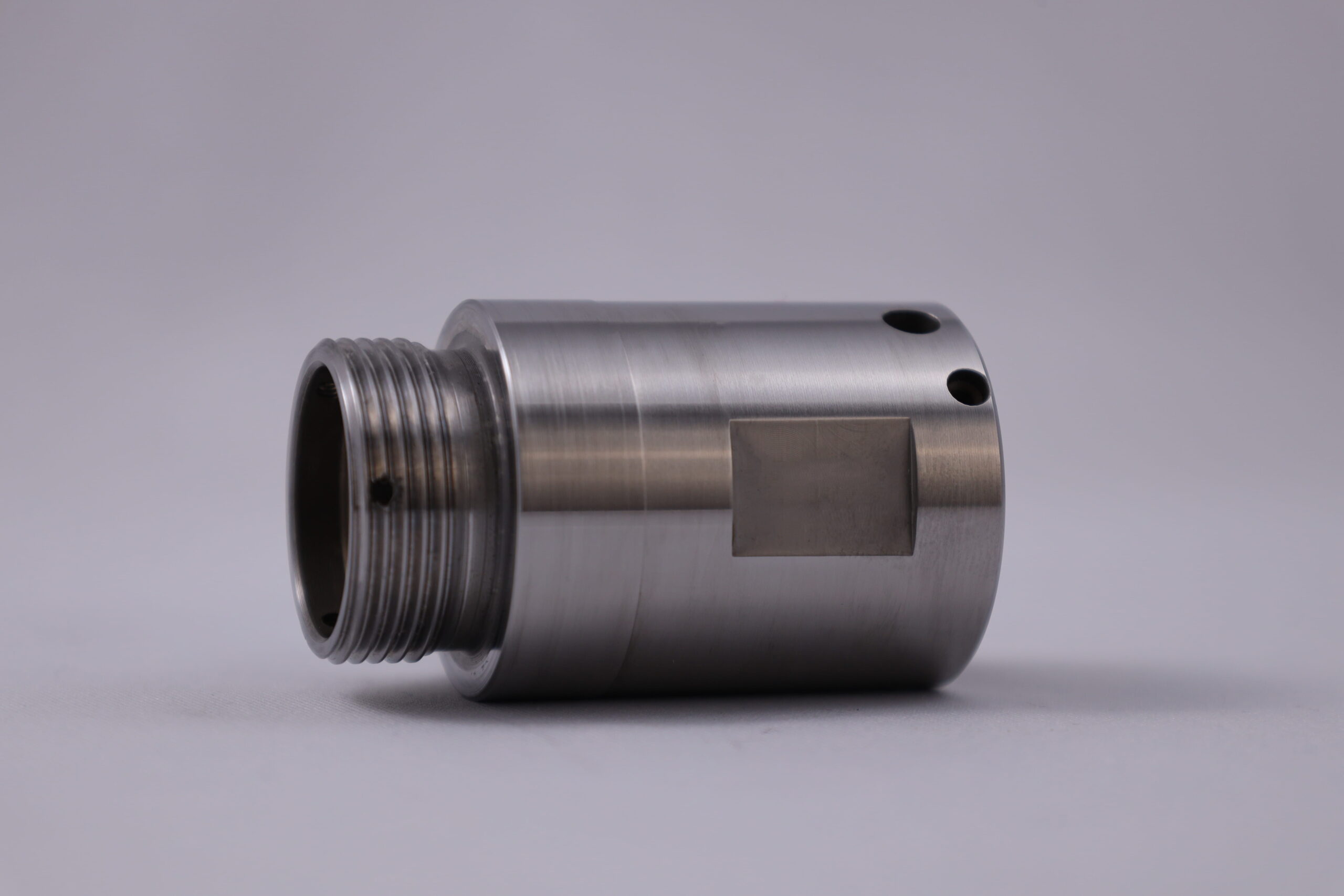
Screw-in Nut
Learn more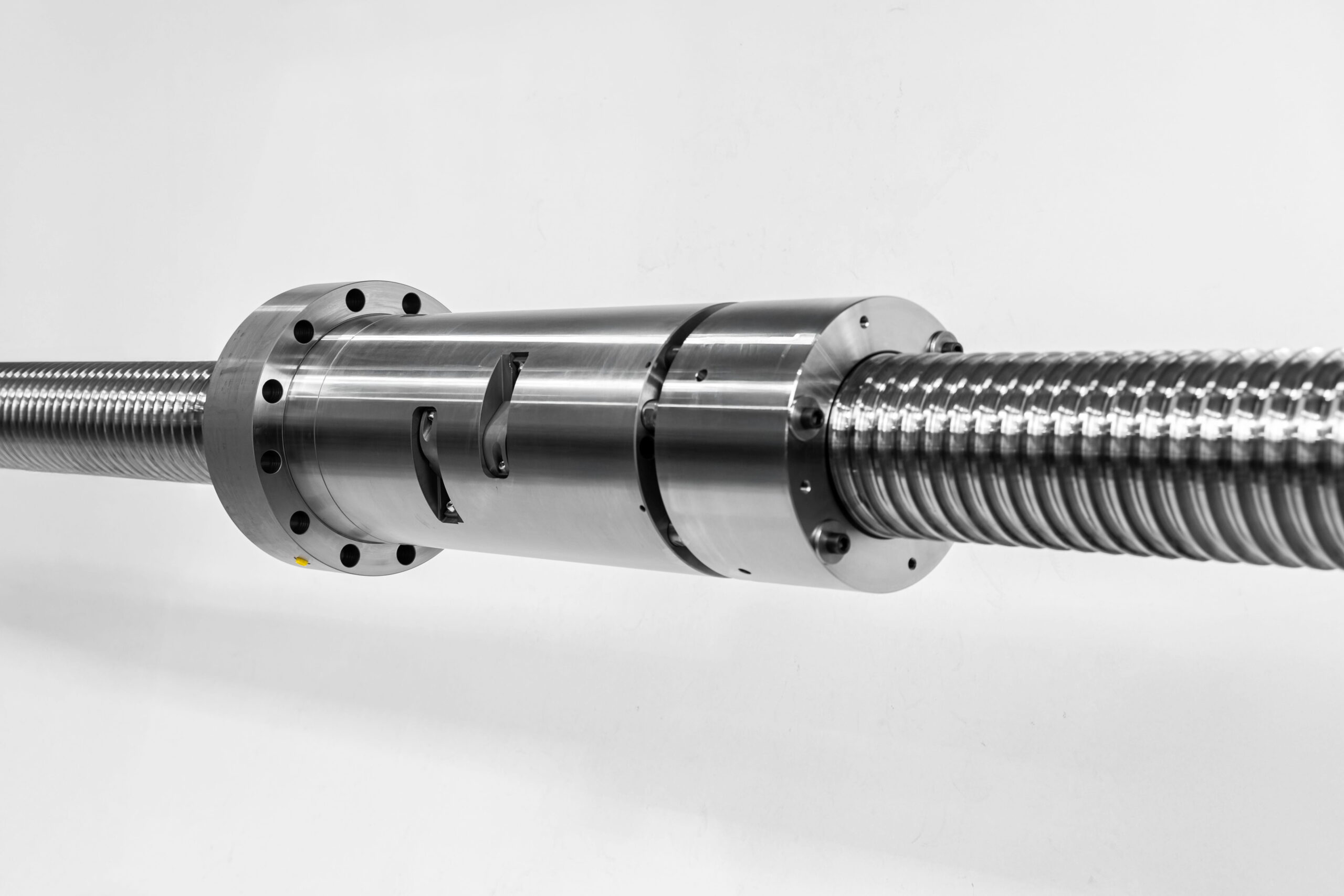
Heavy-duty nut
Learn more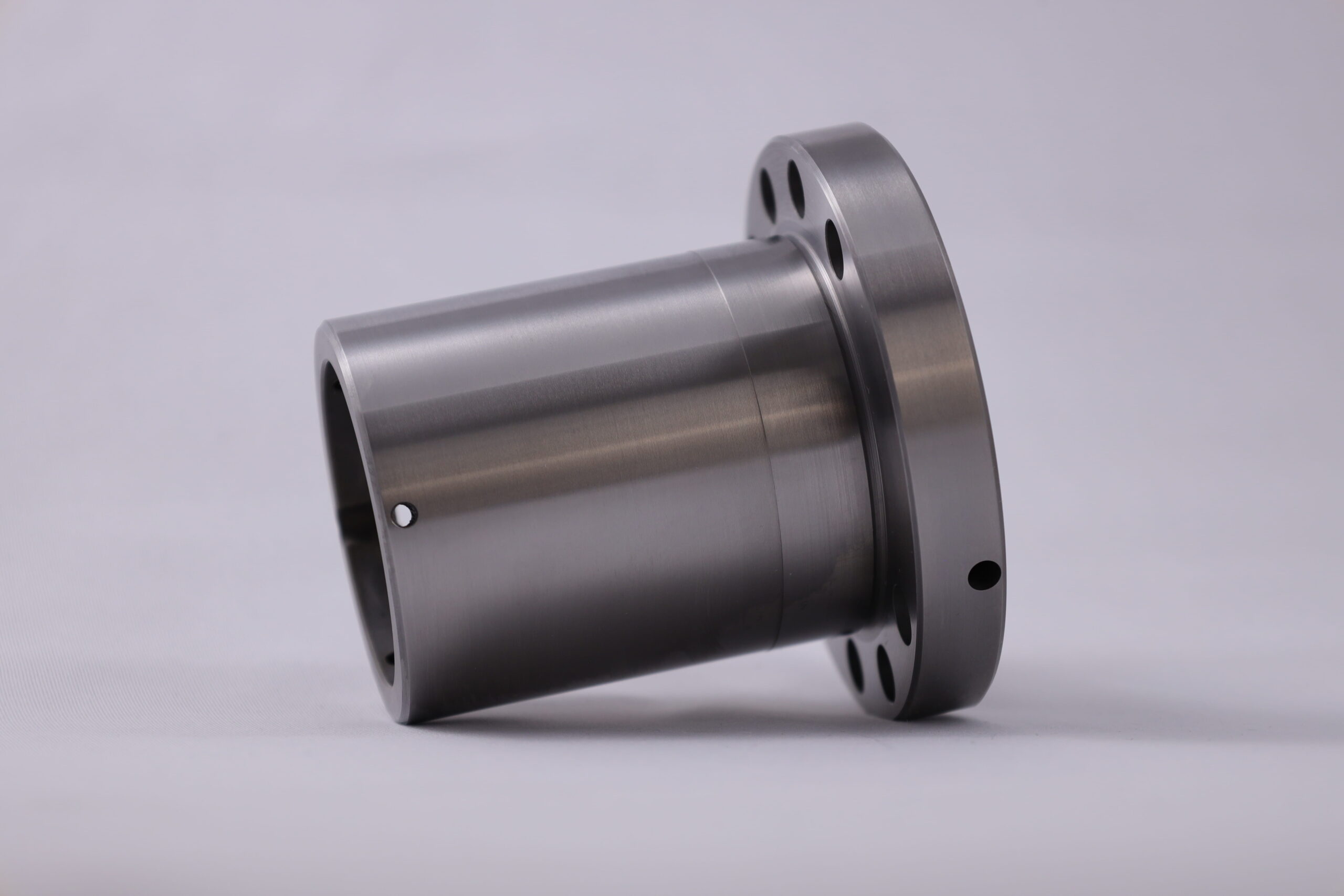
Single-flange nut
Learn more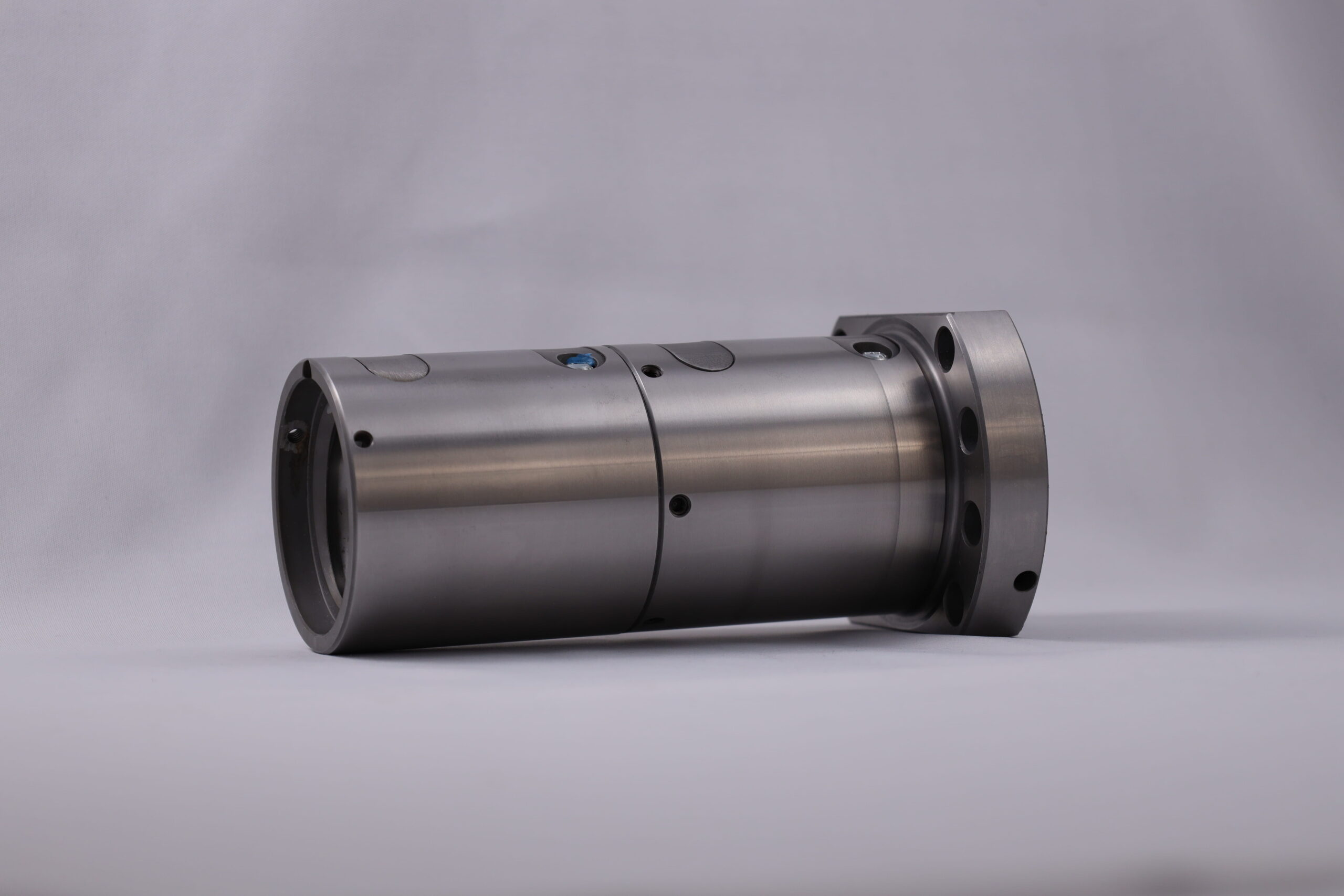
Double Flange Nut
Learn more

CONTACT FORM
Questions
- How should a ball screw drive be mounted?
The bearing arrangement of a ball screw drive should be designed to reliably accommodate axial forces while simultaneously avoiding stresses. In practice, a fixed/floating bearing arrangement is typically employed. The fixed bearing accommodates axial forces in both directions and ensures high rigidity, while the floating bearing guides the spindle radially and compensates for thermal length changes. The bearings must be precisely aligned, preloaded without play, and sufficiently rigidly mounted in the housing to prevent runout, vibrations, and premature wear.